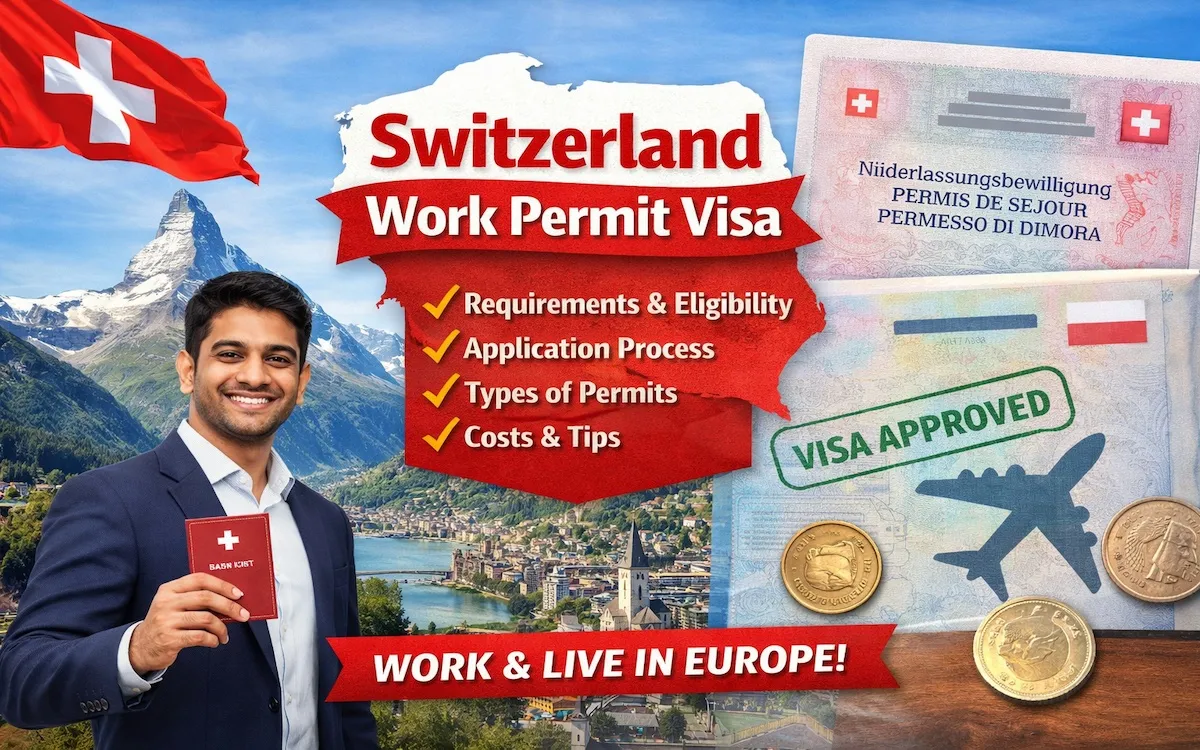
If you’ve ever dreamed of living among snow-capped mountains, pristine lakes, and some of the world’s highest salaries, then the Switzerland Work Permit Visa might be your gateway to a life-changing chapter. Known for its precision engineering, strong economy, exceptional quality of life, and multicultural environment, Switzerland attracts thousands of international professionals every year.
But getting permission to work there isn’t always simple. The rules are strict, the competition is high, and the process can feel overwhelming—unless you have the right guidance.
This in-depth guide breaks down everything you need to know, from permit types to employer obligations, documents, and insider tips—all in a friendly, easy-to-read style.
🌄 A Story: How One Engineer Built a Life in Switzerland
Let’s start with a real-life example.
Mei, a mechanical engineer from Singapore, once visited Switzerland for a short conference. She instantly fell in love with the calmness, clean air, and well-organized cities like Zurich. When she returned home, she made it her goal to work there someday.
Months later, she applied to a Swiss manufacturing company and was selected for an interview. The company loved her expertise, but she faced the same challenge many non-EU professionals face: securing a Switzerland Work Permit Visa.
With patience, preparation, and an employer willing to sponsor her, Mei eventually relocated. Today, she enjoys:
-
A high-quality work-life balance
-
Weekend hikes in the Alps
-
A generous salary
-
A multicultural team
-
Free movement across Schengen countries
Mei often says:
“The permit process looked intimidating, but with the right employer, everything fell into place.”
Her story reflects the experience of thousands of professionals across IT, engineering, finance, healthcare, and hospitality.
🇨🇭 Why Switzerland Is a Top Destination
Switzerland is famous for:
-
High salaries
-
Strong job security
-
Low taxes (depending on the canton)
-
World-class healthcare
-
Clean, safe cities like Geneva
-
Stable politics and economy
-
Stunning natural landscapes
But what truly sets Switzerland apart is its talent-driven economy. Companies constantly seek skilled professionals from around the world.
🛂 What Is a Switzerland Work Permit Visa?
The Switzerland Work Permit Visa allows non-Swiss citizens to work and live in the country for a specific employer. It’s particularly important for:
-
Non-EU citizens
-
Professionals seeking long-term employment
-
Skilled workers in specialized fields
EU citizens enjoy easier mobility due to agreements with the European Union, but non-EU nationals must follow a stricter permit process.
🔍 Types of Switzerland Work Permits
Switzerland offers several work/residence permits based on nationality, duration, and type of job.
1. L Permit – Short-Term Residence Permit
Issued for employment contracts under 12 months.
Features:
-
Can be extended up to 12 months
-
Linked to a specific employer
-
Often used for internships, temporary assignments, and short-term projects
2. B Permit – Initial Long-Term Residence Permit
The most common permit for non-EU employees.
Key features:
-
Issued for long-term employment contracts (12 months or more)
-
Renewable annually
-
Limited quotas for non-EU workers
-
Employer-specific
This permit is highly valued as it often serves as the pathway to long-term residency.
3. G Permit – Cross-Border Commuter Permit
For residents of neighboring countries (France, Italy, Germany, Austria) who commute daily or weekly.
Example:
A software developer lives in France but works in Basel.
4. C Permit – Permanent Residence
Typically issued after living in Switzerland for 5 or 10 years, depending on nationality.
Benefits:
-
Almost complete freedom to change jobs
-
No employer sponsorship needed
-
More stable long-term residency
This is not a work permit but a residence category that allows unrestricted work.
5. Student Work Rights
Students in Swiss institutions can work:
-
Up to 15 hours per week during semesters
-
Full-time during vacations
-
After 6 months of enrollment
🧑💼 Who Needs a Work Permit?
You need a work permit if you are:
-
A non-EU / non-EFTA national
-
An EU citizen staying for longer than 3 months
-
A professional who has secured a Swiss job offer
Exemptions apply for diplomats, short business trips, and certain categories of artists or performers.
📋 Eligibility Criteria for Non-EU Citizens
Switzerland is selective, especially for non-EU applicants. To qualify:
1. You must have specialized skills
Examples include:
-
IT professionals
-
Scientists
-
Engineers
-
Healthcare specialists
-
Finance experts
-
Researchers
2. Employer must prove labor shortage
Before hiring a non-EU applicant, the employer must show:
-
No suitable Swiss or EU candidate was available
-
The foreign worker brings key expertise
3. Salary must match local standards
Switzerland has high wages. A fair market salary must be offered.
4. Adequate accommodation and insurance
Health insurance is mandatory.
🧾 Required Documents
From the employer
-
Job offer or contract
-
Salary details
-
Company registration documents
-
Proof of labor market search
-
Job description
-
Application forms
From the applicant
-
Valid passport
-
Visa application form
-
Qualification certificates
-
CV
-
Work experience letters
-
Police clearance certificate
-
Medical insurance
-
Passport-size photos
Some documents must be translated into German, French, or Italian depending on the canton.
📝 Step-by-Step Switzerland Work Permit Visa Process
Step 1: Secure a Job Offer
Everything begins with a legitimate job offer.
You can apply through:
-
LinkedIn
-
Swiss job portals (Jobs.ch, Indeed Switzerland, etc.)
-
Recruitment agencies
-
University networks
-
Company career pages
Step 2: Employer Applies for a Work Permit
Employers submit your application to:
-
Cantonal immigration authority
-
State Secretariat for Migration (SEM)
Approval depends on:
-
Quotas
-
Labor market conditions
-
Importance of the role
Step 3: Visa Application at Swiss Embassy
Once the work permit is pre-approved, you apply for a visa in your home country with:
-
Passport
-
Visa form
-
Work permit approval letter
-
Photos
-
Proof of funds
-
Accommodation details
-
Insurance
Step 4: Arrive in Switzerland
Within 14 days of arrival, you must register at the local municipal office to obtain your residence permit card.
Step 5: Receive Your Permit and Start Work
After residence registration, your biometric card arrives within a few weeks.
You can then legally start working for your Swiss employer.
💰 Costs of the Swiss Work Permit Visa
| Item | Estimated Cost |
|---|---|
| Visa fee | 60 – 100 EUR |
| Residence permit fee | 100 – 160 CHF |
| Document translation | 20 – 50 CHF/page |
| Insurance | 250 – 350 CHF/month |
| Housing | Varies by city (high in Zurich & Geneva) |
Costs depend on your home country and canton.
📈 Job Market in Switzerland: Who’s in Demand?
Switzerland’s economy is innovation-driven. Industries experiencing talent shortages include:
1. Information Technology
-
Software developers
-
Cybersecurity experts
-
Data scientists
2. Engineering
-
Mechanical, electrical, civil engineers
-
Robotics specialists
3. Healthcare
-
Nurses
-
Pharmacists
-
Medical technologists
4. Hospitality & Tourism
-
Chefs
-
Hotel staff
-
Front-desk managers
5. Banking & Finance
-
Risk analysts
-
Wealth managers
-
Compliance officers
6. Research & Biotechnology
Switzerland is a hub for biotech companies.
⚠️ Common Mistakes Applicants Make
❌ Believing any employer can hire non-EU workers
Swiss laws are strict—only skilled roles are considered.
❌ Submitting incomplete documents
Swiss authorities reject incomplete applications immediately.
❌ Accepting unrealistically low salaries
This may lead to rejection.
❌ Confusing work permit with residence permit
They are related but not the same.
💡 Expert Tips to Increase Your Chances
-
Highlight specialized expertise in your CV.
-
Apply to companies with a history of hiring foreign workers.
-
Tailor your résumé to Swiss standards (simple, concise).
-
Learn basic German or French—it improves employability.
-
Build a strong LinkedIn profile with recommendations.
-
Attend virtual Swiss career fairs.
🏙️ Life in Switzerland: What to Expect
Amazing Work-Life Balance
Swiss companies value efficiency over long hours.
High Salaries
Among the highest globally, even for mid-level professionals.
Public Safety
Switzerland consistently ranks among the safest nations.
Travel Convenience
Schengen access means easy travel to nearby countries.
Clean, Organized Cities
Cities like Zurich, Geneva, and Lausanne offer exceptional infrastructure.
🧭 Key Takeaways
-
Switzerland offers excellent career opportunities but follows a strict permit system.
-
Non-EU citizens face quotas and labor checks, but skilled workers remain in high demand.
-
L and B permits are the most common for foreign employees.
-
Salaries, safety, and quality of life are among the best in the world.
-
A strong application depends heavily on employer sponsorship and your expertise.
❓ Frequently Asked Questions (FAQs)
1. How long does it take to get a Swiss work permit?
It typically takes 4–12 weeks, depending on the canton, workload, and nationality.
2. Can I change employers in Switzerland?
Not freely. Many permits are employer-specific, and you may need a new permit before switching.
3. Is it easy for non-EU citizens to get a work permit?
Not easy, but possible for skilled workers. Switzerland prioritizes highly qualified professionals.
4. What is the salary range for foreign workers?
Salaries vary widely but generally range from 4,500 to 9,000 CHF per month for skilled employees.
5. Can I bring my family to Switzerland?
Yes. Family reunification depends on your permit type, salary, and living space.
✨ Final Thoughts
Getting a Switzerland Work Permit Visa is not the easiest path—but it’s one of the most rewarding. With careful preparation, a strong skillset, and the right employer, you can build a fulfilling, prosperous life in one of the world’s most beautiful and stable countries.
